
Activating Dormant Server and eSports Web Addresses
PC builders and independent developers frequently register URLs for ambitious projects. A dedicated Minecraft server, a competitive eSports team hub, or an indie game portfolio often begins with securing the perfect web address—a digital foundation for future growth. Enthusiasts building small form factor systems for local LAN parties might register a domain to host their community forums or voice communication servers. Standard domain registration cycles typically span 1-to-10-year blocks. When these projects stall before launch, the associated web addresses sit dormant in registrar backlogs. Turning an unused gaming domain into a profitable asset requires active management and a shift in perspective.
Many owners leave these assets passively parked. A passively parked domain simply resolves to a blank page or a generic registrar advertisement, signaling neglect to anyone who types the URL into their browser. An actively prepped digital asset signals immediate availability and professionalism to prospective buyers. The transition from a parked status to an active listing requires a preparation phase of 3-to-5 days. This window allows sellers to organize their digital paperwork, configure hosting environments, and prepare the asset for public evaluation.
The preparation phase involves auditing the domain's history and ensuring all administrative contacts are up to date. Developers often use privacy protection services during the initial registration to shield their personal information from public WHOIS databases. Removing these privacy shields temporarily during the sale process builds trust with potential buyers who want to verify ownership before initiating contact. Organizing these administrative details upfront prevents delays later in the negotiation cycle. Assessing the domain's past usage ensures no lingering penalties from search engines exist, which could devalue the asset for future developers.
Pre-Sale Audit Checklist: Verify that all WHOIS contact information is accurate and accessible before listing the domain to prevent administrative delays during the transfer phase.
Clearing Trademarks and Calculating Gaming Keyword Value
Evaluating market value starts with rigorous legal clearance. Direct queries within the USPTO database for trademark clearance are mandatory. Relying on basic search engine results risks overlooking registered intellectual property and exposes the seller to potential legal liabilities. Trademark application processing delays can leave newly filed gaming terms pending for 6-to-9 months. A term that appears unregistered on a standard web search might already be moving through the federal approval pipeline, creating a hidden risk for the buyer and seller alike.
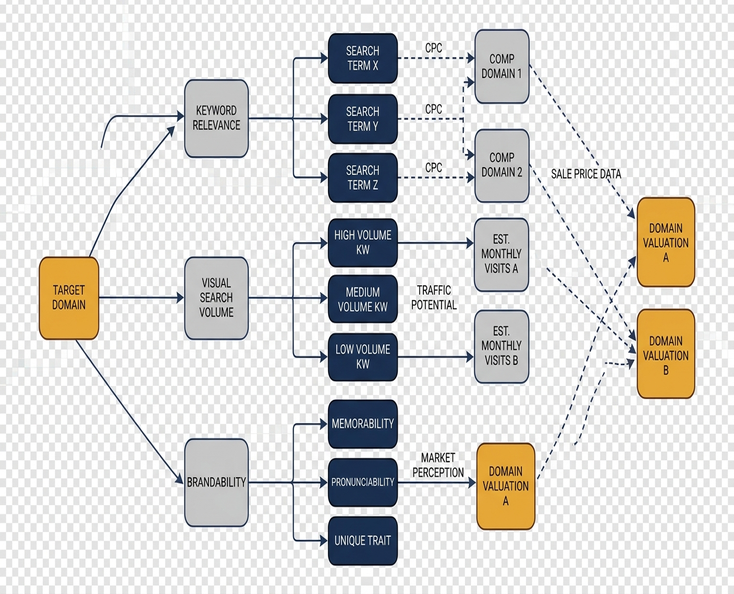
After clearing legal hurdles, sellers must analyze comparable sales to establish a baseline valuation. Historical comparable sales analysis focuses on a trailing 18-to-24-month window. This specific timeframe provides the most accurate reflection of current market conditions without being skewed by outdated internet booms or temporary spikes in niche interests. Analyzing these comps requires access to historical domain sales databases, filtering specifically for tech and gaming keywords. While valuation metrics provide a strong baseline, market volatility means these historical comparisons serve as directional indicators rather than absolute guarantees.
Current gaming industry trends heavily impact keyword value. Virtual reality hardware terminology, indie studio naming conventions, and server hosting phrases command distinct premiums based on market demand. A domain featuring keywords related to low-latency server hosting holds significant value for infrastructure providers looking to expand their regional footprint. Similarly, URLs incorporating popular naming conventions for rogue-like or survival games attract independent studios looking for brand alignment. Understanding these niche markets allows sellers to position their assets effectively. Evaluating the length of the domain, the memorability of the phrase, and the specific top-level domain extension all contribute to the final appraisal.
Interpreting Historical Sales Data
Domain appraisal methodologies point to recent, relevant sales as the most accurate benchmark. Sellers should look for domains with similar character counts and keyword combinations. A four-letter acronym domain will price differently than a two-word descriptive domain. By aligning the asset's characteristics with the trailing 18-to-24-month historical domain comps window, sellers establish a defensible asking price that withstands buyer scrutiny.
Deploying a High-Conversion Landing Page for Tech Buyers
Generic registrar parking pages deter serious buyers. These default pages look unprofessional, obscure the purchasing path, and often display competitor advertisements that distract from the sale. Deploying custom, single-page HTML landing pages establishes credibility immediately. These dedicated pages provide clear contact vectors for tech-savvy buyers and eliminate the friction associated with generic inquiry forms.
A clean 'For Sale' landing page tailored to a gaming audience includes a direct contact method, a brief statement of the domain's gaming relevance, and a secure marketplace link. The design should remain minimal, focusing entirely on the transaction. A standard custom landing page requires approximately 50-to-100 kilobytes of bandwidth per visitor. This lightweight footprint ensures rapid load times across all devices, which is crucial when dealing with buyers who prioritize technical efficiency and clean code.
Implementing this custom page requires updating the domain's DNS records to point to the new hosting environment. Nameserver updates require a 24-to-48-hour global DNS propagation window before the new page becomes visible globally. Sellers must factor this propagation delay into their listing timeline. During this window, the domain might resolve inconsistently depending on the geographic location of the visitor and their local ISP cache.
Landing Page Optimization for Gamers: Keep the design minimal and ensure the marketplace link is the primary interactive element on the page. Avoid heavy JavaScript frameworks that increase load times unnecessarily.
Structuring Pricing Models and Selecting Digital Marketplaces
Pricing strategies dictate the speed and success of the sale. 'Buy It Now' models work well for mid-tier assets. This approach reduces negotiation friction and accelerates the sales cycle, appealing to buyers who want immediate acquisition without prolonged haggling. 'Make Offer' models suit highly sought-after, premium URLs where the ceiling is unknown and multiple interested parties might drive up the final price through competitive bidding.

Selecting domain marketplaces that cater specifically to tech, software, and gaming audiences ensures the listing reaches the right demographic. General marketplaces often bury niche gaming domains under thousands of unrelated listings—a critical error for targeted sales. Standard marketplace commission fees range from 9% to 15% of the final sale price. Sellers must factor these fees into the initial listing price to ensure their expected profit margins remain intact after the platform takes its cut.
Managing listings across multiple platforms increases visibility but requires diligent administration. Inventory synchronization across multiple platforms demands manual updates within a 12-to-24-hour timeframe. If a domain sells on one platform, the seller must immediately remove it from all others to prevent double-selling and subsequent account penalties. Deploying a multi-platform listing strategy is restricted to self-managed sales. Premium brokerage services strictly enforce 30-to-90-day exclusivity contracts that prohibit cross-listing, requiring sellers to commit to a single platform for the duration of the agreement.
Calculating Net Payouts
Understanding the gross versus net revenue is vital for accurate financial planning. When a buyer agrees to a 'Buy It Now' price, the marketplace automatically deducts its commission before disbursing the funds. Sellers utilizing premium brokerage services might face higher commission tiers in exchange for active marketing and negotiation support. Calculating these deductions upfront prevents unexpected shortfalls when the final wire transfer or digital payment arrives in the seller's account.
Executing the Transfer and Securing Escrow Funds
Protecting the transaction requires strict adherence to established transfer protocols. Third-party escrow keeps funds secured in a holding account before the seller generates the transfer authorization code. Escrow services protect both parties, verifying the buyer's payment and confirming the successful transfer of the domain before releasing the funds to the seller.
The transfer authorization process involves unlocking the domain at the current registrar and providing EPP authorization codes to the buyer. Sellers must navigate their registrar's control panel to disable the registrar lock, a security feature designed to prevent unauthorized transfers. Verifying the buyer's registrar details ensures a smooth push or transfer between accounts. A 'push' moves the domain to another account within the same registrar, while a 'transfer' moves it to an entirely different registrar company.
Navigating Administrative Locks
Administrative updates can inadvertently halt the entire process. ICANN transfer policy regulations enforce a mandatory 60-day transfer lock following any modification to registrant contact details. Sellers must avoid updating their email address or physical address immediately before initiating a sale. Generated EPP authorization codes generally remain valid for a 5-to-7-day period before requiring regeneration, so the code is issued when the buyer is ready to pull the transfer, not weeks ahead of it.